
The DDT–Earthworm–Robin Cycle
Silent SpringThis flow tracks how elm spraying moves through fallen leaves and earthworms to threaten robins and reproduction.
increasing Bearing strength in each event
 decreasing
Bearing strength in each eventdecreasingElm Protection Begins
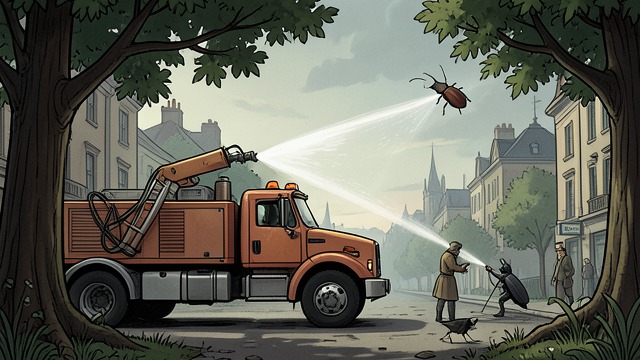
A City Sprays Its Elms
The Target
East Lansing began spraying against Dutch elm disease, while spraying on the Michigan State University campus expanded. Other local insect-control operations added to the chemical burden.
An Unseen Route
The treatment aimed at a beetle associated with the disease, not at birds. The danger emerged through ecological connections that the original control plan did not account for.
Robins Return
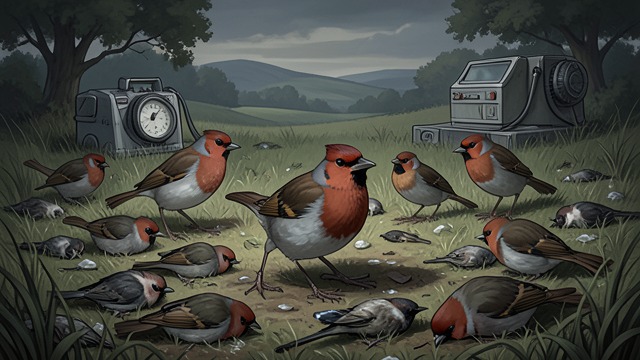
Familiar Territories
Migration and Nesting
Robins returned to the Michigan State University campus as usual, apparently expecting to occupy familiar territories. Their normal seasonal behavior placed them in a landscape recently exposed to insecticides.
A Disturbance Appears
Dead and dying birds soon appeared, and normal foraging and nesting declined. The mismatch between a targeted tree treatment and the deaths of birds prompted closer investigation.
The Leaf-Litter Reservoir
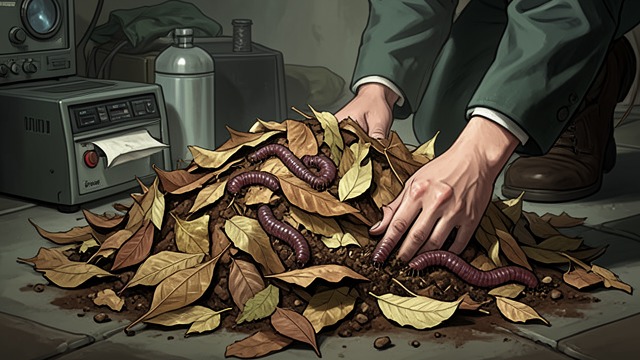
Poison Enters the Soil
Leaves Fall
DDT formed a persistent film on elm leaves and bark. When treated leaves fell, they accumulated on the ground and began the slow process of becoming part of the soil.
Worms Take Up Residue
Earthworms fed on the leaf litter and accumulated insecticide in their bodies. Roy Barker’s work helped reveal how a chemical applied high in trees could later reach birds feeding at ground level.
A Lethal Spring Diet
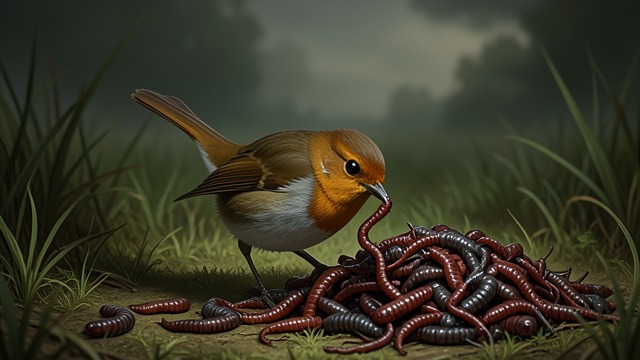
The Food-Chain Link
Feeding Grounds
Returning robins ate earthworms in the treated landscape. A small number of large worms could deliver a lethal dose, while a bird might consume many worms in minutes.
A Repeating Trap
Each new migration brought birds into an environment where residues persisted. The cycle made the campus a graveyard for successive arrivals rather than a one-time site of accidental exposure.
Nesting Failure

The Next Generation
Few Young Survive
Researchers found a striking fall in young robins on campus. Some adults died before nesting finished, while other observations described nests with eggs that did not hatch.
Evidence in Reproductive Tissue
George Wallace reported substantial DDT residues in reproductive organs and eggs. The episode connected immediate poisoning to a broader threat: contaminated adults could also compromise reproduction.
1954
Spring 1955
Autumn after the elm spraying
The spring migration after contaminated leaves entered the soil
By the spring and summer of 1958
